Garden of the Gods, Colorado Springs — the ancient sedimentary fins tilted to vertical by the Laramide Orogeny, against the signature Colorado blue sky.
The Garden of the Gods is one of those places where geology becomes theatre so completely that you forget the two things are usually distinct. The story goes back to the Laramide Orogeny — the mountain-building event that uplifted the Rockies beginning around seventy-five million years ago — which took horizontal beds of ancient sedimentary rock and tilted them toward vertical, until fins and blades of red, pink, and white sandstone were pointing at the sky like a geological argument. The rock itself is older than the mountains: Permian and Pennsylvanian sandstone laid down in ancient seas and dune fields between three hundred and two hundred and eighty million years ago. Humans have been visiting — and finding the place worthy of sustained attention — since at least 1330 BC, when prehistoric peoples first gathered here. In 1859, when two surveyors camped nearby and one suggested it would make a great beer garden, the other replied that it was fit only for a garden of the gods. The name stuck, and the man who suggested beer is lost to history.
Walking among the formations in the clear April air, with the sky doing what Colorado sky does — an aggressive, implausible blue that seems too saturated to be natural, like a photograph someone has post-processed too enthusiastically — is a genuinely disorienting experience. The rocks are as red as fresh brick, shot through with seams of cream and white where different mineral concentrations have layered over geological time. They emerge from the earth at angles that make no intuitive sense until you know the history. They do not look like things that grew. They look like things that arrived.
April crowds at the Garden are manageable. The main tourist paths were populated but not overwhelmed, and by moving half a mile to the quieter trails we found ourselves virtually alone among formations that would, in July, be elbow-to-elbow with visitors. This is the consistent gift of off-season travel: access that high-season visitors have to queue for, buy advance tickets for, occasionally fight over.
Downtown Colorado Springs surprised us — genuinely so. We had expected a strip-mall American city and found instead a compact, walkable centre animated by genuine independent businesses: brilliant art galleries, ceramics studios, clothing shops with actual personality, the kind of café that has its own roasting philosophy. America's downtowns, when they work, are among the best things about it. This one was working.
We ordered pizza from a small restaurant that had painted its name large across the shopfront: 4/20 Pizza. The owner volunteered the story before we could ask. His daughter had suffered with cancer, and during her treatment she had found relief from cannabis. The name was in her honour — not a joke, not a wink at stoner culture, but a direct, quiet tribute paid at a pizza counter to the thing that had eased his child's pain. He told us with complete simplicity and no expectation of a particular response. We ate the pizza. It was good. It was very good, actually. But what we remember more than the pizza is the man's face as he said it: a father who had found a way to keep saying his daughter's name every day, in letters three feet tall on his shop front, without having to explain it to anyone who didn't want to hear it.
"The rocks do not look like things that grew. They look like things that arrived."
Photography Notes — Episode Two
Conditions: Variable — morning overcast, afternoon clearing to dramatic cloud formations and directional light as we approached Colorado. Wind-blown dust creating atmospheric haze in places.
Flat land as composition: The temptation is to see a flat landscape as a photographic problem. It isn't. It's an invitation to think about line, space, and proportion. A grain tower placed at the left third of the frame with the full sky filling two-thirds behind it is a genuinely striking image. The flatness is your canvas.
Leading lines: Interstate highways are tremendous compositional tools. A straight road receding to the vanishing point — particularly when shot at low angle from the roadside or from the passenger window — creates depth in a landscape that has no topographic depth of its own. Shoot toward the light for maximum contrast on the asphalt surface.
Cloud formations: The Midwest in spring produces cloud structures that photographers in mountainous terrain rarely see because the mountains interrupt the sky before the clouds can fully develop. Use a wide angle (16–24mm) and include maximum sky. A polarising filter will deepen the blue between cloud masses.
Grain towers: The best shots treat them as vertical punctuation in a horizontal world. Shoot from low and wide to maximise the apparent height. Late afternoon light catches their cylindrical surfaces beautifully, creating a lit half and a shadow half that reads as genuine three-dimensionality.
From the passenger seat: Use the sun visor as a shield for your lens and keep your shutter fast. Preset your exposure before you pick up the camera — fumbling for settings while the shot passes at 70 mph is a reliable way to miss it.
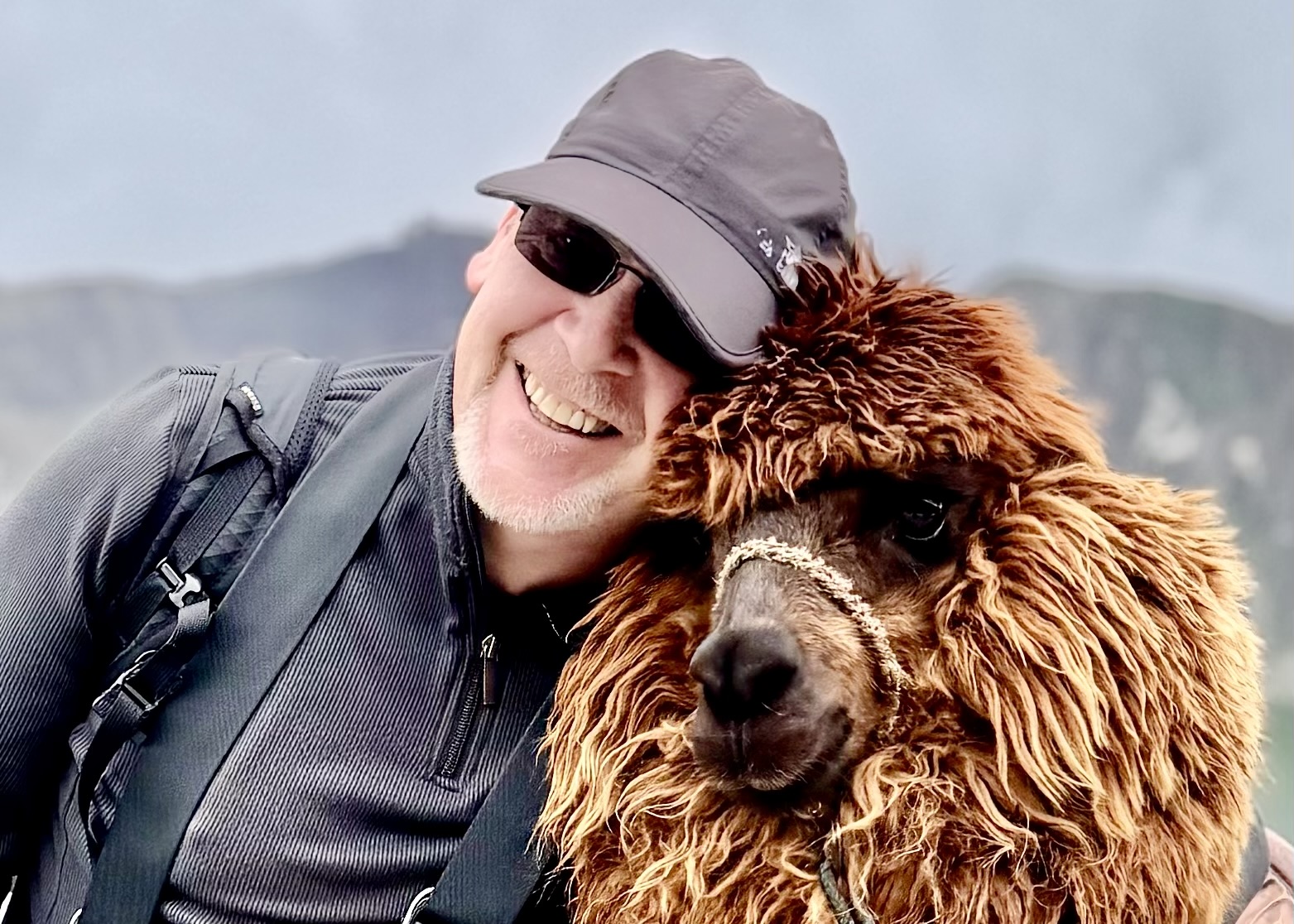
A native of Scotland and an award-winning Creative Director who has honed his skills at some of the most prestigious advertising and design agencies in both the UK and the US. His dynamic approach to creativity has earned him accolades and awards, but it’s his personal pursuits where his true artistry shines. An avid adventurer, Robbie finds peace and solace hiking and exploring the great outdoors. These days it’s through photography that he channels his passion for creativity and artistic vision, capturing the essence of nature’s beauty. His vibrant images reveal the intricate play of natural light, amplifying the allure of his subjects and offering viewers a fresh perspective on the world around them. Robbie resides in Boston, Massachusetts, and embarks on extensive travels throughout the United States and beyond.