There is a category of American experience that resists easy categorisation: the thing one determined person has built, over the course of their entire adult life, with their own hands, in defiance of anyone who told them they couldn't. Jim Bishop, who was fifteen years old in 1969 when he purchased a parcel of land in the San Isabel National Forest near Rye, Colorado, for four hundred and fifty dollars, belongs firmly in this category. Neighbours compared his early construction to a castle. Jim took this as a reasonable suggestion and began building one. He did not stop until the day he died.
Bishop Castle, reached by a mountain road that winds through pine forest and makes no particular promise about what you'll find at the end, is now a multi-story structure of genuine engineering audacity. Spiral staircases of wrought iron connect towers that rise forty, fifty, sixty feet. Stained-glass windows glow in the mountain light. Bridges of hand-forged iron span the gaps between structures. And on one tower, visible from a considerable distance, there is a fire-breathing dragon — a magnificent thing constructed from salvaged stainless steel serving trays, its ignition system a repurposed hot-air balloon burner. Jim built it all. Jim, who had no formal engineering training.
There is no admission charge. There are no staff. There are signs posted by Jim in a number of locations that express Jim's views on various subjects — government, property rights, the nature of freedom — at some length and with considerable feeling. You are welcome to agree or disagree. You are welcome to walk through his life's work and be astonished by it. We were astonished by it. It is the life's work of a single human being who decided, with no particular qualifications, to build something that would outlast him. Whether it does or not, the effort itself is its own monument.
“The castle is extraordinary — eccentric, impractical, structurally alarming in places, and completely magnificent".
Photography Notes — Episode Five
Conditions: Bright mountain light at Bishop Castle, afternoon haze in the San Luis Valley. Interior/exterior light mixing at Bishop Castle required careful exposure management.
Bishop Castle — interior/exterior exposure challenge: The stained-glass windows are dramatically brighter than the dark ironwork surrounding them. Bracket your exposures or shoot to preserve the window detail and lift the ironwork in post-processing. HDR techniques work well here if applied with restraint.
Wide angle for tower interiors: Inside the castle towers, a 16–20mm lens gives you enough field of view to capture the spiral staircase leading up and the ironwork ceiling above simultaneously. Watch for distortion — keep the horizon level to avoid baroque perspectives that undermine the intended grandeur of the structure.
Drone for aerial overview: An aerial perspective of the full castle complex reveals its scale and relationship to the surrounding forest in a way impossible from the ground. Check local airspace regulations before flying.
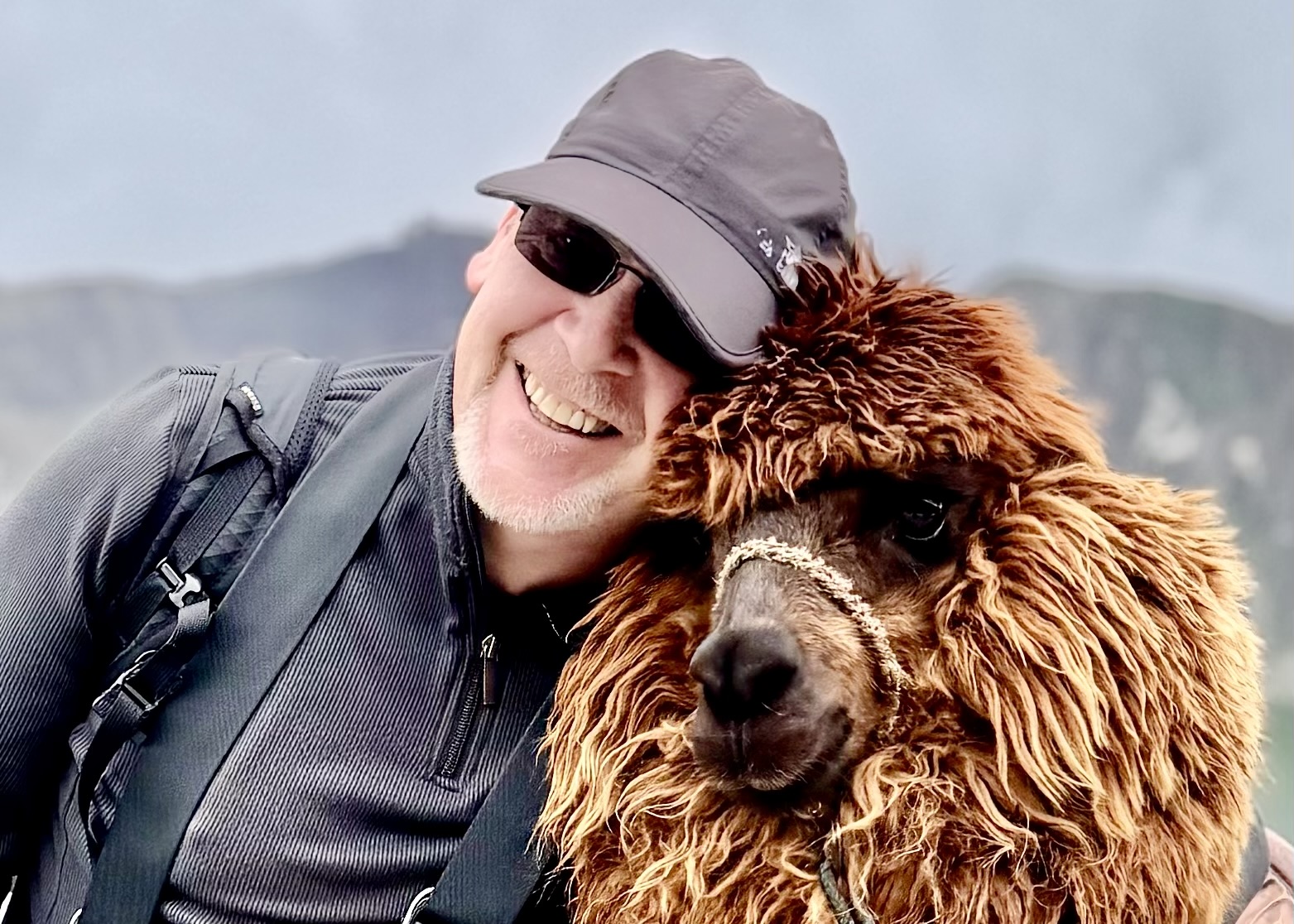
A native of Scotland and an award-winning Creative Director who has honed his skills at some of the most prestigious advertising and design agencies in both the UK and the US. His dynamic approach to creativity has earned him accolades and awards, but it’s his personal pursuits where his true artistry shines. An avid adventurer, Robbie finds peace and solace hiking and exploring the great outdoors. These days it’s through photography that he channels his passion for creativity and artistic vision, capturing the essence of nature’s beauty. His vibrant images reveal the intricate play of natural light, amplifying the allure of his subjects and offering viewers a fresh perspective on the world around them. Robbie resides in Boston, Massachusetts, and embarks on extensive travels throughout the United States and beyond.