Five hundred miles to Colorado Springs, and the landscape earns it. The drive south from Denver on I-25 is an exercise in anticipation — the Rockies assemble themselves on the western horizon over the course of an hour, growing from a suggestion to a statement to an insistence, until you realise the white-capped shapes you thought were clouds are in fact mountains, and the mountains are closer and taller than anything your East Coast nervous system had been briefed to expect. Colorado Springs sits at the foot of Pikes Peak, elbow of a town that manages to be simultaneously military installation, outdoor recreation capital, and home to one of the better collections of independent art galleries and locally rooted restaurants you'll encounter anywhere in the American West.
We found our way to Cheyenne Mountain State Park, which has the audacity to offer its campsite visitors east-facing views across the endless Colorado prairie and west-facing views to the Rocky Mountains at twelve thousand feet, snowcapped and matter-of-fact about it. You can stand at your picnic table and look one direction toward the entire emptiness of the Great Plains and the other toward peaks that would be considered extraordinary anywhere in Europe, and the whole thing costs you approximately the price of a decent lunch. America, for all its contradictions, occasionally gets the public land thing exactly right.
We set up, cooked, and ate while the sun lowered itself toward the mountains. And then, across the hillside below us, the prairie dogs arrived. Or rather — they had been there all along, underground, and now they emerged into the evening light in their hundreds, popping up from burrow entrances like a slow-motion fireworks display, each one pausing to assess the world from its hind legs before deciding the world was acceptable and going about its business.
Prairie dogs are not, despite their name, dogs. They are burrowing ground squirrels of the genus Cynomys, and they are among the more socially sophisticated animals on the North American continent. They live in "towns" — interconnected burrow systems that can extend for thousands of acres and house hundreds of thousands of individuals, organised into family groups called coteries. Their warning call system is extraordinary: researchers have established that prairie dog vocalisations encode specific information about approaching threats, including the size, colour, and shape of a predator. They are not saying "danger." They are saying, approximately, "large tan coyote approaching from the north-northwest." The prairie dog town on that hillside at Cheyenne Mountain was issuing a complete, detailed report on us, and we were not privy to any of it.
Then, from the south — from Fort Carson, the Army installation that has anchored Colorado Springs since 1942, named for the scout and soldier Kit Carson who mapped much of the West in the mid-nineteenth century — came the sound of a bugle. Taps. Played precisely, mournfully, in the thin mountain air at the end of the duty day, the notes carrying six miles across the prairie with the clarity that altitude and cold give to sound. The prairie dogs continued their conversations. The mountains continued being mountains. The bugle note hung in the air just a moment longer than it should have, the way the best things always do.
There are moments on a road trip that the camera captures and moments that it doesn't. That evening was both at once. We shot the prairie dogs, and we got some reasonable frames. We did not shoot the bugle call, obviously. But the image of all of it together — the hillside, the small creatures, the mountains going pink at the peaks, the military ceremony playing out in the distance — is one of the sharpest memories of the whole journey. Some frames resist the camera entirely. That's fine. That's what memory is for.
“The bugle note hung in the air just a moment longer than it should have, the way that the best things always do.”
Photography Notes — Episode Three
Conditions: Clear sky, golden hour light, sun setting behind the Rockies to the west — ideal backlighting for the hillside scene. Temperature dropping rapidly as light fell.
Backlighting at golden hour: The setting sun behind the mountains created beautiful rim lighting on the prairie dogs — a warm outline glow around their fur when they faced away from us. To capture this, expose for the lit areas and let the shadow sides go dark, or bracket and blend in post.
Silhouetting small subjects: A prairie dog at full alert stance on a high burrow mound, silhouetted against the prairie sky, is a strong graphic image. Set your exposure for the sky (which will make the animal pure black) and shoot from as low as you can manage. Get your lens at grass level if possible.
Telephoto for wildlife: A 300mm or longer lens is the minimum for keeping your distance and filling the frame with animals this size. We used a 400mm with image stabilisation on a bean bag draped over the van's open window. Shutter speed: minimum 1/800s to freeze the unpredictable movement of a prairie dog conducting its business.
The challenge of atmosphere: The bugle call, the convergence of sounds and distance and light — photography cannot encode this. What it can do is record the physical facts: the animal, the light, the mountain behind. The photograph becomes an aide-mémoire for the complete experience rather than a complete record of it. Let the image do what it can, and remember the rest yourself.
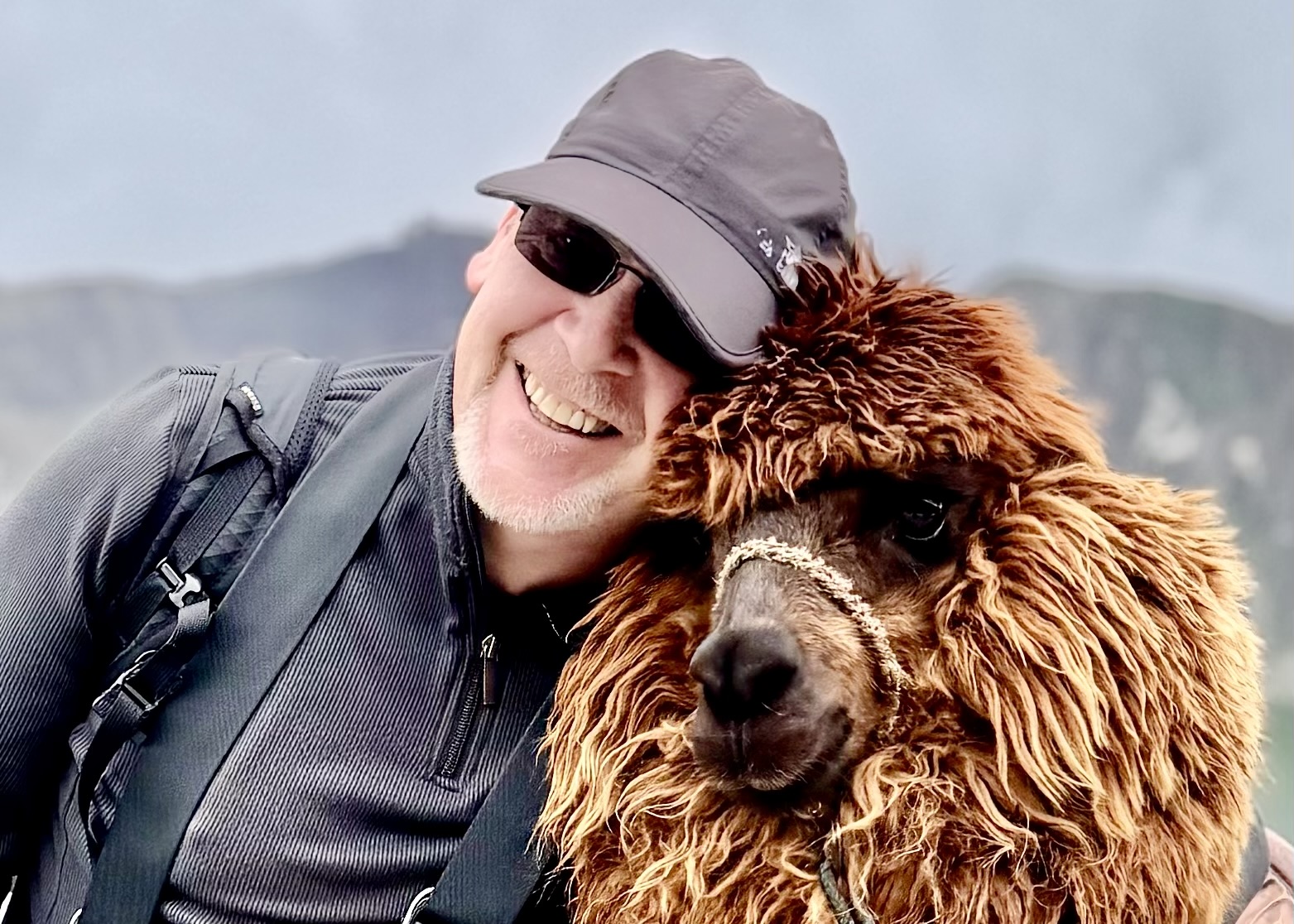
A native of Scotland and an award-winning Creative Director who has honed his skills at some of the most prestigious advertising and design agencies in both the UK and the US. His dynamic approach to creativity has earned him accolades and awards, but it’s his personal pursuits where his true artistry shines. An avid adventurer, Robbie finds peace and solace hiking and exploring the great outdoors. These days it’s through photography that he channels his passion for creativity and artistic vision, capturing the essence of nature’s beauty. His vibrant images reveal the intricate play of natural light, amplifying the allure of his subjects and offering viewers a fresh perspective on the world around them. Robbie resides in Boston, Massachusetts, and embarks on extensive travels throughout the United States and beyond.