Delicate Arch at sunrise — the theatrical reveal over the sandstone bowl rim, framed against the distant La Sal Mountains. The pre-dawn hike earns this.
The drive north from the San Luis Valley to Moab is the kind of route that should come with a warning. The landscape does not stay still. It shifts under you — valley floor to high plateau, scrubland to pinyon-juniper forest, forest to the exposed red rock of the Colorado Plateau — as though the continent is running through its geological wardrobe en route to its most impressive outfit. By the time you reach Utah, the rock has gone a deep terracotta and the sky has gone a specific shade of blue that seems exclusive to this part of the world, as though it's been reserved for the occasion.
The road into Arches National Park climbs a cliff face on switchbacks so tight they require a van driver of even moderate skill to think carefully about geometry. The cliff wall rises on one side. The void opens on the other. Fifteen hundred feet above the valley floor, you crest the rim, and the park reveals itself: a plateau of red slickrock and juniper, punctuated by fins and windows and arches and towers of Entrada Sandstone in quantities that require a moment of recalibration.
There are more than two thousand documented natural sandstone arches in Arches National Park. This is the highest concentration of natural arches on earth. They exist because of a combination of geology so specific to this region that it amounts to a kind of natural conspiracy: salt deposits left by ancient seas formed a thick subsurface layer; the weight of subsequent sediment caused the salt to flow and shift; the surface layer cracked and jointed; erosion — wind, water, the patient physics of freeze-thaw cycles over millions of winters — widened the cracks and ate through the fins until some were perforated all the way through. Some arches are small enough to crouch through. Landscape Arch, the longest, spans 290 feet from base to base. Delicate Arch is neither the largest nor the longest but is, unquestionably, the most itself: a freestanding portal of red sandstone, sixty feet tall, rising from the edge of a natural sandstone bowl in a posture of such inevitable elegance that every photograph of it still surprises you.
We gave Arches two full days. This is the minimum, and we will defend this position. The trail to Delicate Arch begins at Wolfe Ranch — a nineteenth-century homestead whose stone cabin still stands, a reminder that people tried to extract a life from this stone landscape in conditions that were, by any measure, demanding. At the trail's start, a panel of Ute Indian petroglyphs is carved into the canyon wall: riders on horseback, deer, figures of uncertain meaning — people saying, across centuries, that they were here, that this place was known. The trail rises steadily across slickrock slabs, each painted with cairns, until it rounds a sandstone fin and the arch appears over the rim of the bowl without preparation or warning — theatrical, inevitable, an amphitheatre containing nothing but sky and the distant blue shapes of the La Sal Mountains beyond.
We also spent time on trails to the south of the main viewpoint, finding perspectives on the arch that are less photographed and, in some ways, more revealing: the arch small in the frame against the full La Sal Mountains behind it, or seen through a gap in the surrounding rock that frames it inside a natural window. Two days in Arches does not feel like enough. It does not feel like it would ever feel like enough.
"The arch appears over the rim without preparation or warning — theatrical, inevitable, an amphitheatre containing nothing but sky."
Photography Notes — Episode Eight
Conditions: Two days, variable — morning clear, afternoon building cloud, April temperatures moderate. Pre-dawn hike to Delicate Arch for sunrise access.
Frame within a frame: The defining compositional principle of Arches is the natural window. Use one arch to frame another, use a rock gap to frame the arch, use the canyon rim to frame the sky behind the arch. Every great Arches photograph is a frame containing a frame.
Delicate Arch at sunrise: The pre-dawn start is non-negotiable if you want the best light and the fewest people. The trail is manageable with a headlamp. Arrive at the bowl before the sun hits the arch and wait. The light builds from amber to gold to full morning brilliance over twenty minutes. Shoot throughout — the changing quality of light produces five distinct moods in that window.
Foreground on slickrock: The sandstone slabs around the arch are textured, striated, beautiful in their own right. Include them as foreground interest — a wide-angle perspective with textured rock sweeping in from the bottom of the frame toward the arch gives depth and rootedness.
Telephoto for arch + mountains: A 200–300mm lens compresses the La Sal Mountains behind Delicate Arch, making them appear much closer to the arch than they are. The effect is dramatic — red arch, blue-white mountains, in the same focal plane. This is the shot that justifies carrying a heavy lens up the trail.
Two days as minimum: No negotiation. The first day is orientation. The second day is photography. Book accordingly.
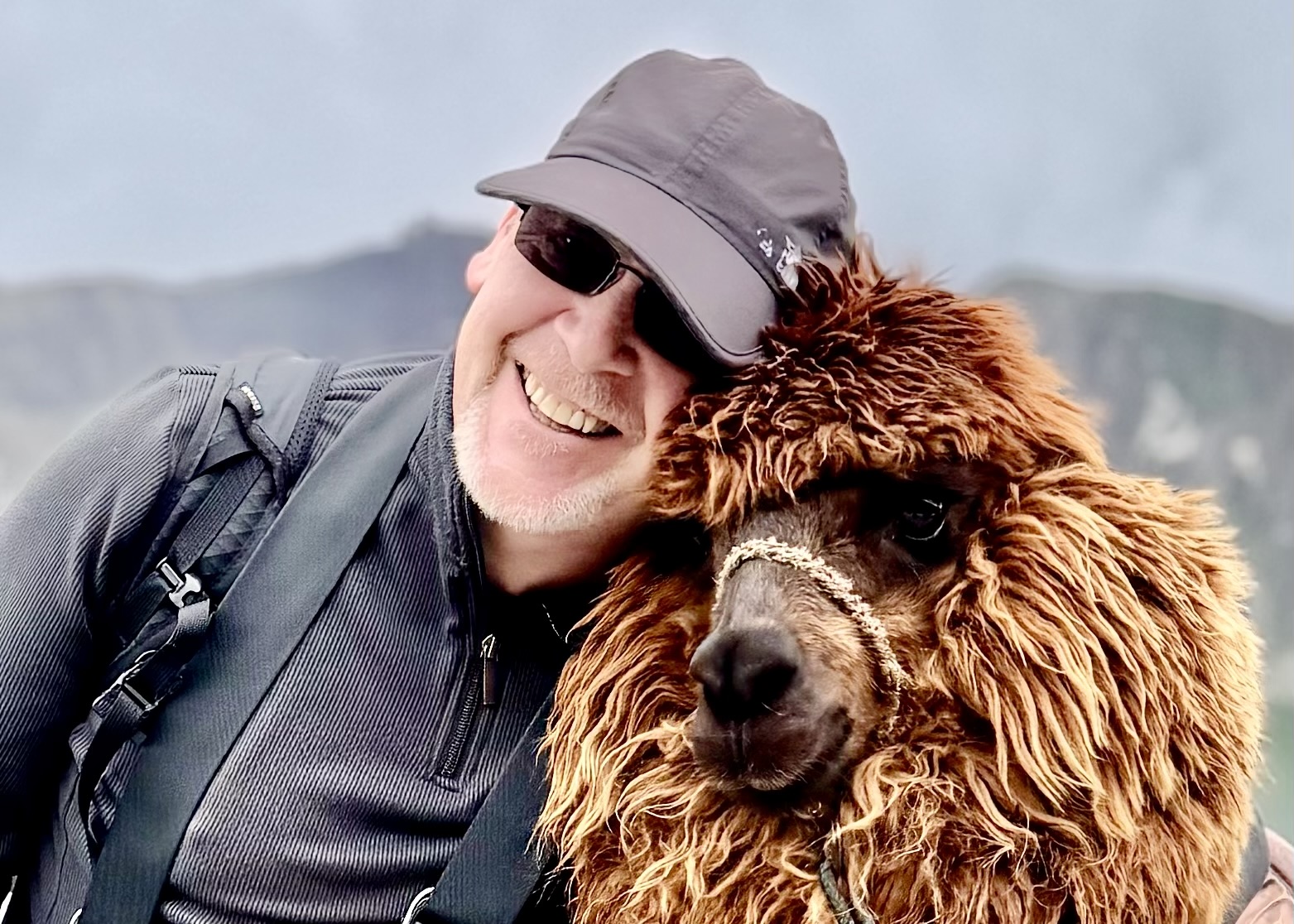
A native of Scotland and an award-winning Creative Director who has honed his skills at some of the most prestigious advertising and design agencies in both the UK and the US. His dynamic approach to creativity has earned him accolades and awards, but it’s his personal pursuits where his true artistry shines. An avid adventurer, Robbie finds peace and solace hiking and exploring the great outdoors. These days it’s through photography that he channels his passion for creativity and artistic vision, capturing the essence of nature’s beauty. His vibrant images reveal the intricate play of natural light, amplifying the allure of his subjects and offering viewers a fresh perspective on the world around them. Robbie resides in Boston, Massachusetts, and embarks on extensive travels throughout the United States and beyond.