Mormon Row, Grand Teton National Park — the Moulton Homestead barn against the full Teton range. One of the most photographed scenes in the American West, and still capable of stopping you completely.
The Tetons do not ease you in. There are no foothills. This is, geologically speaking, the defining fact about them: the Teton Fault is still active, and the mountains on its western side have been uplifting for nine to ten million years — making them the youngest peaks in the Rocky Mountain chain — while the valley on the eastern side, Jackson Hole, has been subsiding. The result is a mountain front of absolute directness: the peaks rise from the flat valley floor without preamble or preparation, nine thousand feet of vertical relief in fewer than twelve horizontal miles. No other mountain range in the contiguous United States presents this profile.
We camped at Antelope Flats, dispersed camping in the sagebrush flats east of the main valley, with a view of the Teton range across the full width of Jackson Hole. The mountains are not subtle from here. They are the entire western horizon, snowcapped and specific, their individual summits — the Grand Teton at 13,770 feet, Mount Owen, Teewinot — identifiable at distance in a way that mountain ranges usually aren't. Bison grazed in the sagebrush around us with the complete indifference of animals that have been in this valley for considerably longer than any campground has existed.
Grizzly bears, we were reliably informed, were mostly still in the final stages of hibernation in late April. Mostly. We kept food sealed and our expectations calibrated accordingly. The prairie dog towns extended for acres across the flat, their residents conducting the usual vigorous commentary on our presence. Research has established that prairie dog calls encode specific physical descriptors of approaching threats — colour, size, shape, speed — with a precision that linguists find remarkable. The prairie dog at the edge of the colony nearest our van almost certainly had opinions about us that we were not equipped to translate.
Our neighbour at the dispersed camp was a man who had been living full-time in his van for four years. This is not, in itself, unusual on the van-dwelling circuit. What was unusual was the exterior of his vehicle: a huge pull-down cinema screen mounted on one side, a roof-mounted projector, full surround sound, a fold-away outdoor table. He watched films at night under the open sky, alone, in locations like this one. He had no plans to stop. The road, he said, had not run out of things to show him. We believed him.
The temperature was 34°F at night — unusually mild for late April in the Tetons, which normally sees heavy snow well into May. The mildness was a gift that came with a caveat: the weather system building to the northwest was not mild. The south entrance to Yellowstone was already closed. The west entrance was closed. The storm forecast was for nearly a week of sustained severe weather. We drove to the north end of Grand Teton Park and confirmed what the weather reports were saying: the Yellowstone southern entrance sign read CLOSED. Standing at it felt like a specific kind of loss — Yellowstone had been on the plan since before the plan was a plan.
We made the decision to drop Yellowstone, head east to the Badlands, and stay ahead of the storm. It was the correct decision and a disappointing one simultaneously, which is the nature of correct decisions when they involve giving something up. We turned south.
The final Teton morning was a gift the landscape offered without obligation. The Teton Scenic Highway was closed; we took Route 191 along the Snake River instead. Mormon Row — the late nineteenth-century homestead buildings, their weathered wood the colour of old whiskey, their angles slightly off-true from a century of Wyoming winters — against the full Teton backdrop, low cloud catching in the mountain summits. An elk herd grazing in the middle distance. Jackson Lake Dam and Colter Bay Village, then the drive north to the closed Yellowstone gate. A bison herd moving across the open plain in a line, unhurried. And then the sunset: the Tetons silhouetted against a sky of deep red and orange and gold that bled upward into blue with a completeness that made the landscape look like a painting from the period when painters felt entitled to make things look exactly this good. One of the most beautiful sunsets of the trip. Perhaps the most beautiful. The mountain without foothills, going black against fire.
"The mountains rise from the valley floor without preamble. There are no foothills. The Tetons have never learned moderation, and this is exactly right."
Photography Notes — Episode Fifteen
Conditions: Variable over three days — clear mornings, building afternoon cloud, dramatic sunset on final evening. Low cloud on departure morning. Temperature 34°F overnight.
Mormon Row barn — the classic shot: Low angle, the weathered barn occupying the left third of the frame, the full Teton range filling the upper two-thirds, dramatic cloud preferred. Shoot at f/11 for front-to-back sharpness. Dawn light catches the barn's east-facing walls warmly before the sun is high enough to flatten the mountains. This is the shot that gets up early.
Bison at dawn in open plains: Long lens (400mm minimum), patience, and low light tolerance. Set your ISO to 800–1600 for the early morning light levels. Bison in low angle amber light, sagebrush foreground, the Tetons as backdrop — this is the visual argument for getting up before sunrise every single day.
The Teton sunset — wide angle for the profile: The mountain range's unique "no foothills" profile is best communicated in a wide composition that shows the flat valley floor, the abrupt vertical rise, and the peaks. Include the Snake River foreground where possible — the river's S-curve provides compositional depth.
Astrophotography potential: Dark sky, clear nights (when weather allows), with the Teton profile as foreground — the Milky Way rising above the peaks on a moonless night is a serious astrophotography opportunity. Plan exposure as per Canyonlands notes; focus on the specific mountain silhouette as a unique foreground anchor.
The “mountain without foothills” compositional principle: Use a foreground element at valley level — a fence line, a sagebrush clump, the barn — that establishes the flat baseline, then let the mountains rise dramatically from that baseline without interruption. The composition tells the geological story.
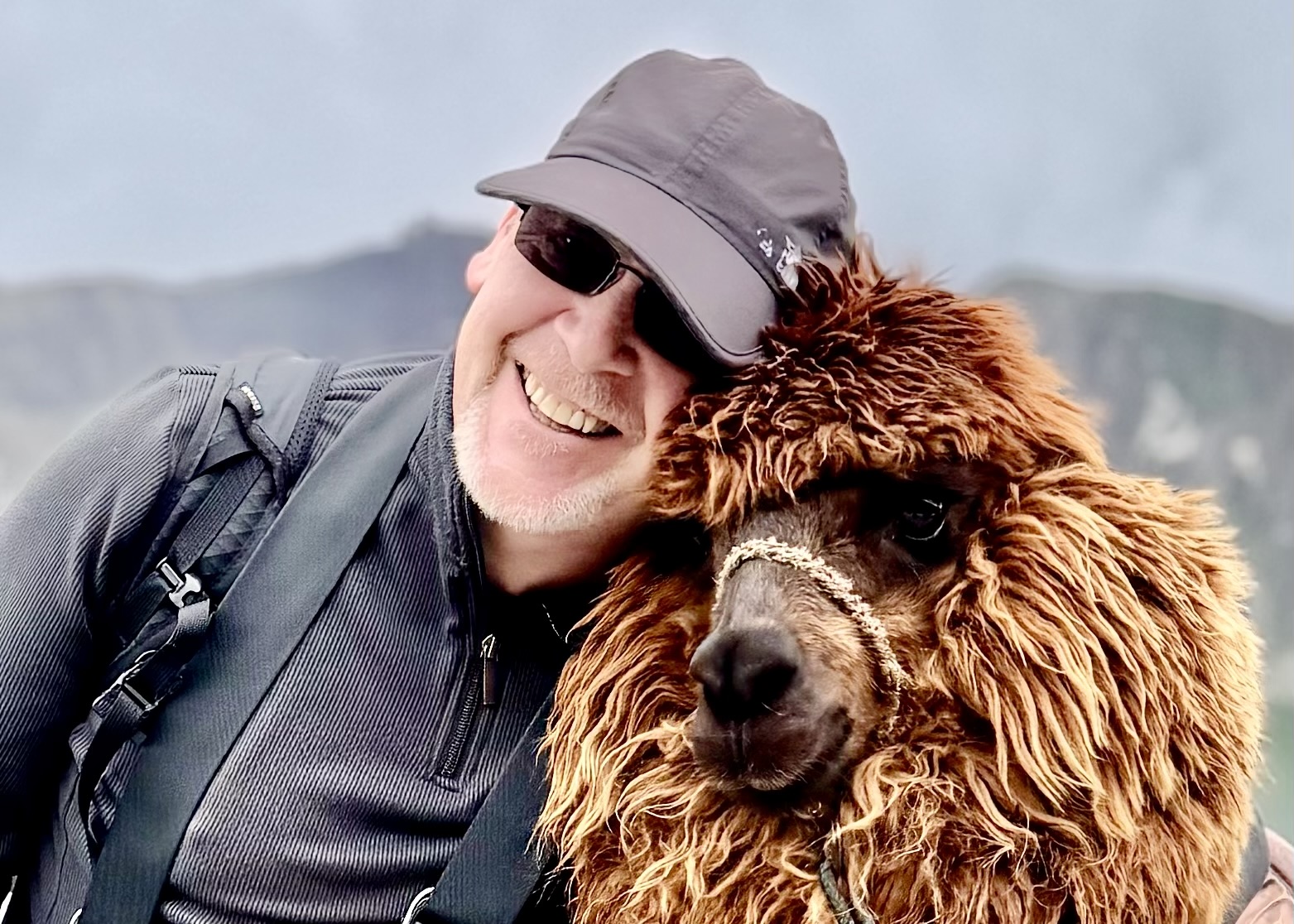
A native of Scotland and an award-winning Creative Director who has honed his skills at some of the most prestigious advertising and design agencies in both the UK and the US. His dynamic approach to creativity has earned him accolades and awards, but it’s his personal pursuits where his true artistry shines. An avid adventurer, Robbie finds peace and solace hiking and exploring the great outdoors. These days it’s through photography that he channels his passion for creativity and artistic vision, capturing the essence of nature’s beauty. His vibrant images reveal the intricate play of natural light, amplifying the allure of his subjects and offering viewers a fresh perspective on the world around them. Robbie resides in Boston, Massachusetts, and embarks on extensive travels throughout the United States and beyond.